By NITHYAANAGHA M
Summary
Article summary: Ozzy Osbourne had survived enough intoxicants to kill a small nation. Was it pure luck or a genetic shield?
His 2010 genome project turned rock-star folklore into hard science. If one man carries 300,000 unknown variants, what hidden shield lies within your own code? As sequencing costs plummet, we are finally mapping the global tapestry of human diversity—from heavy metal legends to entire nations.
Introduction
A world where the high energy of heavy metal intersects with the frigid corridors of a molecular biology lab seems rather whimsical. On one side, there is Ozzy Osbourne, a man whose legendary diet of chemical excesses and the occasional bat head should have, by all accounts of medical science, rendered him a ghost decades ago. On the other side is the field of genomics: the intricate precision and effort to read the 3-billion-letter instruction manual of human life. At first glance, the two seem to inhabit entirely different universes. Yet, in 2010, Ozzy became a literal ‘living’ bridge between celebrity folklore and scientific data, proving that even the most chaotic lives can be decoded into very orderly base pairs. Genomics is the study of an organism’s complete set of DNA. This is about mapping every single one of the billion chemical bases that make up our unique biological blueprint. For decades, sequencing an entire human genome was an immensely complex, costly and extremely time-consuming endeavor.
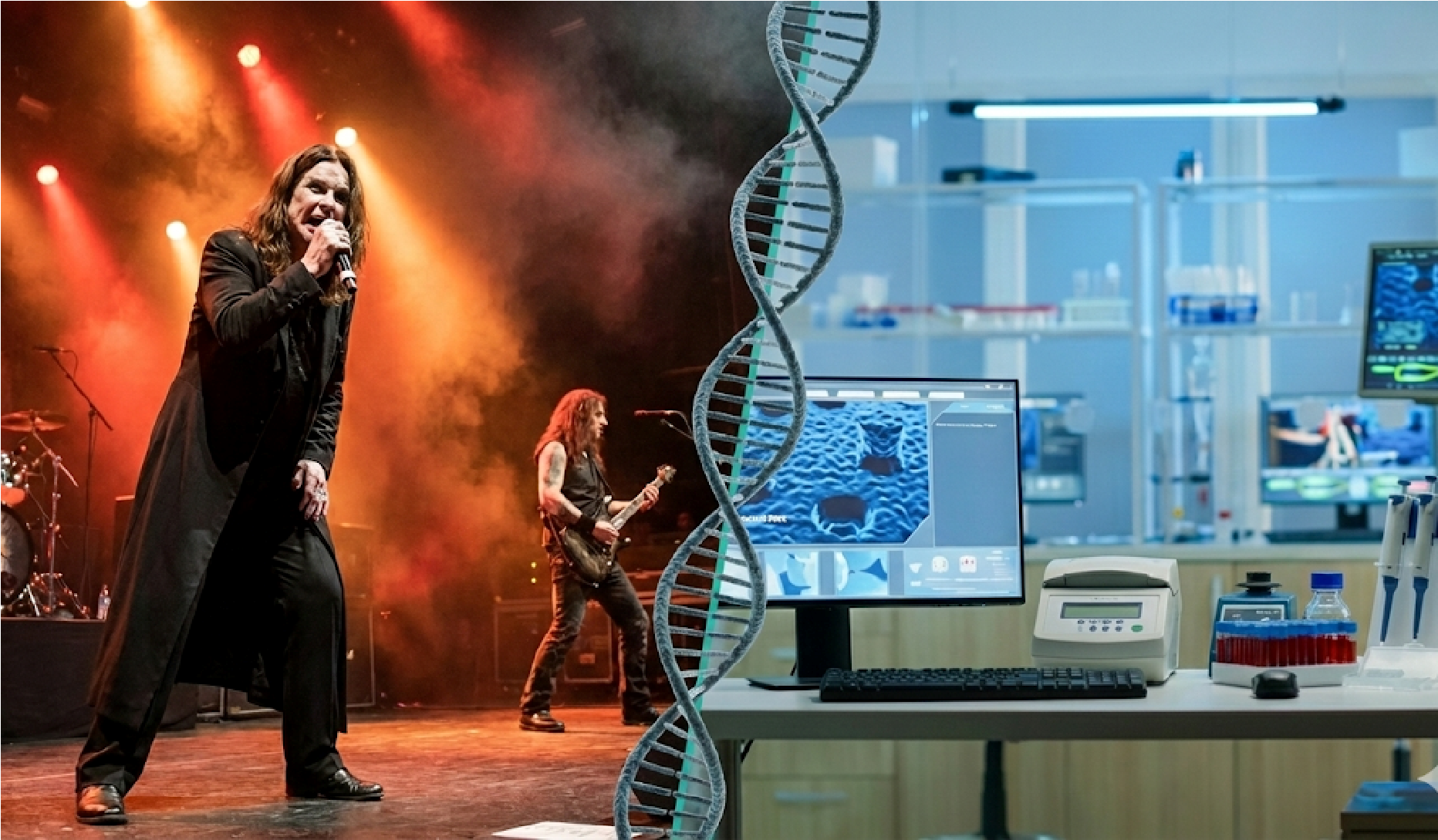 (image) A visualization of the 2010 collision between the chaotic world of rock-and-roll and the precision of molecular biology.
The "Exception" to the Rule
In the 2009 romantic comedy He’s Just Not That Into You, a central premise is that while most people obsess over being the exception to a rule (the one woman for whom the guy finally changes), they are almost always the rule. In the world of biology, human beings usually follow the rule: we have predictable reactions to toxins, exhaustion, and aging. Ozzy Osbourne, however, is the ultimate genetic exception. He is the biological outlier who survived a lifestyle that would have dismantled the cellular machinery of an average human.
This curiosity led to the 2010 Ozzy Osbourne Genome Project. While the original Human Genome Project (HGP) took thirteen years and billions of dollars to map the first human blueprint, the companies Knome, Inc. and Cofactor Genomics saw Ozzy as the perfect case study to test the limits of modern sequencing. The goal was simple: find the ‘miracle’ hidden in his blood.
The Findings: A Blueprint for Resilience
When the researchers finished sequencing his DNA, the results were presented at the TEDMED 2010 conference(held at the Hotel del Coronado in San Diego- watch the video here):
- The Alcohol Shield: A novel mutation was found near his ADH4 gene. This gene encodes an enzyme that metabolizes alcohol. It appeared his body could process toxins at a rate that would put a laboratory centrifuge to shame.
- The Addiction Paradox: Ironically, he was genetically six times more likely to suffer from alcohol dependency. His genes gave him a drive towards addiction but an extraordinary metabolic defense against its toxic effects.
- The Caffeine Twist: To add to the irony, the man who survived swimming pools of booze was found to be a slow metabolizer of caffeine. He was genetically more sensitive to a cup of coffee than to a bottle of Jack Daniel's.
- Ancient Heritage: A more well-known fact is that his DNA contained segments of Neanderthal ancestry.
- The Great Unknown: Most importantly, his genome featured hundreds of thousands of de novo mutations that were undocumented in the scientific databases at that time,
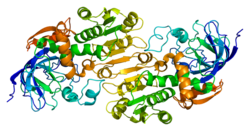 Meet the ADH4 enzyme: Ozzy’s personal genetic bouncer and the ultimate
'shield' for his liver. Interact with the 3D model!
Meet the ADH4 enzyme: Ozzy’s personal genetic bouncer and the ultimate
'shield' for his liver. Interact with the 3D model!
Making the Invisible Visible: The Technical Leap
How did we go from the $3 billion HGP ‘rule’ to the $50,000 ‘Ozzy exception’, and finally to today’s $600 ‘everybody’ genome? It is really about how we read the book of life.
- Sanger Sequencing (The Old Guard): Initially, Sanger sequencing read the genetic book one sequence at a time. This was very accurate but also very slow, requiring years and thousands of machines to process 3 billion base pairs. This technology built the foundation ( the Human Genome Project) but kept genomics behind the closed doors of elite institutions. .
- Next-Generation Sequencing (NGS): Think of this as ripping the book into millions of tiny scraps and having a million tiny robots read every scrap at the exact same time. A computer then stitches the story back together in hours. This massively parallel approach is what allowed Ozzy to get his results in weeks rather than decades.
This same technology involving these three factors allows projects like the Genome India Project to sequence 10,000 whole genomes, mapping geographical variation with the same detail once reserved for high-status people:
- Data Density: We can now pack trillions of fragments onto a single slide, up from millions in 2010.
- Miniaturization: Chemical "ink" for these reactions is now used in microscopic volumes.
- Computational Power: Bioinformatics algorithms can now stitch millions of data scraps together in hours rather than weeks.
By 2010, Ozzy was the "exception" because he was one of the first individuals to use this parallel approach technology privately. The Ozzy Osbourne Genome Project used an early version of NGS (specifically the SOLiD 4 platform).
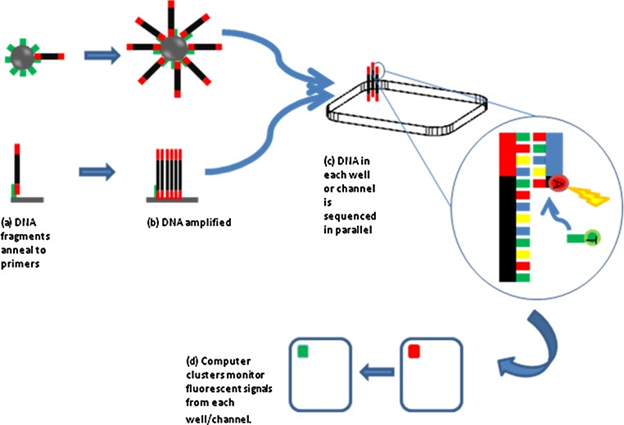 The "massively parallel" approach of NGS, where DNA is fragmented and millions of sequences are read simultaneously, a process that revolutionized the speed and cost of genomics researchgate.net
The Global Tapestry and the India Connection
While Ozzy provided a singular, eccentric data point, the real power of genomics lies in scale. To understand why some populations are prone to diabetes while others are resistant to certain viruses, scientists need data from every corner of the map.
In India, this quest for genomic documentation for all has taken a massive leap forward. The Genome India Project (GIP) recently completed the sequencing of 10,000 whole genomes representing 99 ethnic groups across the country. This project addresses the "missing" data in global science, where most reference genomes have historically been of European descent. By sequencing thousands of Indians, researchers are finding variations as unique as Ozzy’s ADH4 mutation. These variants might explain why some communities are more resilient to local pathogens or how they metabolize specific medications.
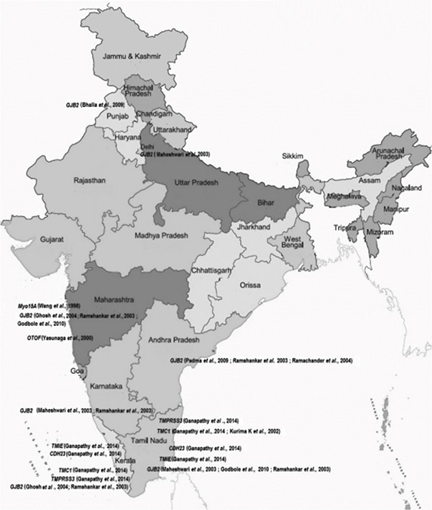
A visual representation of the geographical variation within the Indian population, showing the sampling locations for the thousands of genomes sequenced to create a representative national reference researchgate.net
Furthermore, India’s Department of Biotechnology (DBT) has pushed the boundaries of accessibility with the One Day One Genome initiative. While the GIP focuses on humans, One Day One Genome focuses on the invisible world of microbes. By releasing an annotated microbial genome every single day, the program makes cutting-edge data available to the public and researchers alike. Whether it’s a bacterium that helps crops grow in salty soil or a microbe found in snake scat, this program treats data as a public utility.
The $1,000 Finish Line
The ultimate takeaway from the Ozzy Osbourne project isn't just that he's a medical miracle. It’s that the price of admission to the most intimate parts of our biology has collapsed. In 2010, Ozzy’s project was a $50,000-plus celebrity stunt. Today, a whole-genome sequence, which basically is reading every single one of those 3 billion letters, can be done for under $1,000(or 90,267.35 INR as of Jan 2026).
With enough money (now less than the price of a high-end smartphone), anyone can do exactly what the Prince of Darkness did. One can find out if they are a "warrior" or a "worrier," check their caffeine sensitivity, or trace their Neanderthal roots. We have moved from a world where only the "exceptions" like Ozzy could see their code, to a world where the "rule" includes all of us. The stage is set, the technology is cheap, and the data is finally becoming as diverse as the people it describes.
References
[1] "Ozzy Osbourne's Genome Reveals Some Genetic Mutations," Wired, Oct. 2010. [Online]. Available
[4] National Human Genome Research Institute, "The Cost of Sequencing a Human Genome," genome.gov. [Online]. Available: (Accessed: Nov. 4, 2025).
[5] J. M. Perkel, "Next-generation sequencing: The race to the $1000 genome," Nature Methods, vol. 9, no. 3, pp. 225–228, Mar. 2012. DOI: 10.1038/nmeth.1899
[6] UK Biobank Sequencing Consortium, "The UK Biobank whole-genome sequencing project," Nature, vol. 622, pp. 529–537, Oct. 2023. DOI: 10.1038/s41586-023-06580-2
[7] All of Us Research Program Consortium, "Genomic data in the All of Us Research Program," Nature, vol. 627, pp. 100–107, Mar. 2024. DOI: 10.1038/s41586-024-07001-3